Sunday, April 8, 2012

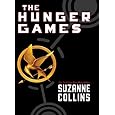
The Hunger Games

Product DetailsI gobbled Suzanne Collins’s The Hunger Games when I was supposed to be reading Life of Pi. This was interesting pairing, given both novels depict characters pushed to extremes and using other potentially deadly characters for survival. Collins’s work is written for a younger audience and is easy to digest quickly while Martel’s Life of Pi is denser, postmodern, and more aesthetically interesting.

The thematic difference between the two, I would argue, surfaces when examining the presentation of violence. The ending of Life of Pi, which retells the castaway story using humans instead of animals, suggests that it’s easier for humans to digest stories of violence when attached to animals than when attached to humans, which assumes humans find violence among humans distasteful. Hunger Games, on the other hand, suggests humans delight in watching other humans torture and kill one another, which assumes humans are comfortable objectifying one another, particularly in the service of entertainment and of maintaining power in the hands of a few. Sadly, I think the latter assumption is more true than the former, as public displays of violence for entertainment have demonstrated from games in the Roman Coliseum to CNN’s capitalization on embedded reporting during the Gulf War.

So, while the Hunger Games series is lighter literary fare than Life of Pi, it does address serious social justice issues. In the first book of the series, the main issue is fascist power structures encouraging the disenfranchised to battle one another instead of overthrowing the oppressive power structure itself. In the novel, Panem represents civilization arising in post-apocalypse America. Due to the thirteen districts rebelling against the Capitol, the Panem government keeps the districts economically dependent on the center and implemented the Hunger Games as a reminder of the price paid for treason. Each year, each of the twelve remaining districts sends two tributes, a boy and a girl, to the Capitol for the Hunger Games, which are televised live. The tributes battle each other until only one is left, and that one is declared the winner. The Hunger Games themselves illustrate the use of media to establish competition among the districts so that they cannot again collaborate to attempt a coup, maintaining power in the hands of a few in the Capitol.

In response to the “divide and conquer” political strategy that maintains the oppressive power structures, the novel also posits small ways in which individuals can collaborate to resist those structures. When the protagonist, Katniss, volunteers to replace her younger sister as District 12 tribute, her selflessness becomes an act of resistance. Same goes for the mutual support that grows between Katniss and Peeta, the boy tribute from District 12, and between Katniss and the youngest tribute, Rue. Where the games encourage tributes to kill one another, mutuality indicates a refusal to play.

The ultimate moment of resistance that saves both Katniss and Peeta occurs when Katniss and Peeta plan to eat poison berries together and thus rob the Capitol of a victor. In staging this moment, Peeta uses the media coverage that has been used against them. Peeta says, “Hold them out. I want everyone to see” (344). He wants to make sure the Gamemakers and those in the home audiences know they are intentionally eating poison berries so that either the Gamemakers intervene to stop them or so that citizens can hold the Gamemakers accountable for their deaths. Through this act of mutuality, Katniss and Peeta defeat the game, embarrassing the Gamemakers, and situating themselves in rebellious opposition to the Capitol.

It’s important to remember that individuals have power in fascist systems, even if it is only the power to refuse to cooperate. As Michel Foucault writes, “Where there is power, there is resistance” (95). The existence of resistance to domination should give us all hope that we can take action against injustice. The keys to this action are mutuality (we don’t have to work alone) and publicity (one of the few ways small resistances can put pressure on fascism).

When the movie came out, I was worried that Hollywood’s need to reap profit from entertainment would co-opt the social-justice message of the novel, but I was pleased that the film remained closely aligned with the novel. In particular, the Hunger Games were not depicted as brave or fun but as an obscene form of torture perpetrated by a spoiled, comfortable public on oppressed groups. The costuming was particularly effective in making the film consistent with the novel. Never did viewers feel comfortable in the seductive wealth of the Capitol; instead, we remained consistently on edge with the protagonist, horrified at the excess and waste, the foolish obsession with fashion and media, and the willingness of the Capitol audience to enjoy the bystander role in witnessing human-on-human destruction.


Works Cited

Collins, Suzanne. The Hunger Games. New York: Scholastic, 2008. Print.

Foucault, Michel. The History of Sexuality: An Introduction. Vol. 1 New York: Vintage, 1978. Print.

Image Source:

The Hunger Games. Book Cover. N.d. Amazon.com. 8 April 2012. <http://www.amazon.com/s/ref=nb_sb_noss?url=search-alias%3Daps&field-keywords=Hunger+Games>

Sunday, February 26, 2012

The Curious Incident of the Dog in the Night-Time

Mark Haddon’s The Curious Incident of the Dog in the Night-Time tells the story of 15-year-old Christopher Boone, a child with Asperger’s Syndrome, a kind of autism. Because the story is told from Christopher’s first-person perspective as an account he is writing with the encouragement of one of his teachers, the story has hallmarks of his perspective, including chapters numbered using prime numbers, accurate sketches that indicate a photographic memory, and the math problems Christopher uses to calm himself. The narration also uses his own stilted phraseology, some that seems to come word-for-word from the science books and videos he enjoys, and some that seems to come from adults having explained things to him, like definitions.

What fascinates me most about this novel is the perspective. It provides a fictional window into alternative perceptions of the world, which aids me in considering the different ways people may need to be treated. For example, not everyone finds touch reassuring, so it might be good to ask or get a sense of whether an individual might like to be touched before doing so. Same goes for eye contact, which also has cultural variations where eye contact can seem insolent or invasive rather than trustworthy. The book also demonstrates that disability may have nothing to do with intelligence, as Christopher is highly intelligent with an exceptional memory and merely puts information together in his own unique way.

Perhaps even more profound is the idea of fiction itself, which Christopher indicates he cannot engage in. He writes, “A lie is when you say something happened which didn’t happen” (24). This seems pretty straightforward: he has difficulty processing lies. But, lying is so much broader and more wound into our daily lives than simple untruths. Christopher goes on to say, “But there is only ever one thing which happened at a particular time and a particular place. And there are an infinite number of things which didn’t happen at that time and that place. And if I think about something which didn’t happen I start thinking about all the other things which didn’t happen” (24). The category of “things which didn’t happen” includes untruths and speculations about the past, ponderings and fantasies regarding the present, and hopes for the future, not to mention aesthetic fictions. For Christopher, admitting any of these into his consciousness opens the door to all of them, which is more than he can stand. His difficulty illustrates the complexity of the average human’s ability to juggle the mix of realities that comprise daily life.

While Christopher’s reality might seem alien, his struggles are also struggles of average people, just a little more exaggerated. We all have cognitive activities we do well, and we prefer those activities when we are surprised or challenged by others. We all can get overwhelmed by too many stimuli and employ coping mechanisms under such circumstances. We all live by a set of social rules that tell us how to behave in a variety of social situations. While we may not have Christopher’s limits in dealing with “strangers,” we do have similar kinds of limits that help us balance social interaction with safety. Seeing Christopher wrestle with his challenges reminds us that we are not alone in our own struggles.

Aside from the depiction of Christopher’s perspective, the plot of the novel operates traditionally, hooking the reader by establishing one mystery: who killed the neighbor’s dog with a garden fork? It then intensifies the conflict by revealing a second: that, despite the claims of his father, Christopher’s mother is not dead. Christopher treats himself as a detective seeking clues, and the reader is eager to unravel the adult problems revealed partly through the dramatic irony inherent in Christopher’s youthful perspective. When eventually Christopher embarks on a journey to London in order to find his mother, the reader reads on, hoping Christopher can conquer the anxieties associated with his disability in order to arrive safely at his mother’s apartment. Yet, even after successfully eluding the police and saving his rat Toby from the train tracks, Christopher does not find comfort at the journey’s end, as adult problems again surface to confuse him.

Christopher’s difficulties speak to the challenges of our social system where individual families are often left responsible for family members who cannot care for themselves. Without assistance or training, not to mention adequate funding, these families attempt to rise to the occasion, but the challenges of such care can end relationships, absorb money that would otherwise go to necessities, and, as frustrations escalate, result in violence. Christopher acknowledges that his mother has hit him and retells a scene where his father, frustrated with the questions he asks neighbors as part of his detective work, grabs him, causing Christopher to hit him, and likely resulting in his father’s hitting back, although Christopher’s memory shuts down from the overstimulation (103-04). That loving parents could get so frustrated with their disabled son that they would strike him speaks to the difficulty of these situations and to the need for society to provide more support, such as caregivers to spell family members from the care that saps their energy and humanity and education to assist them in providing better care for their loved ones.

Work Cited

Haddon, Mark. The Curious Incident of the Dog in the Night-Time. London: Vintage, 2003. Print.

Image Source

"The Curious Incident of the Dog in the Night-Time." [Book Cover] amazon.com 26 Feb. 2012. http://www.amazon.com/s/ref=nb_sb_noss?url=search-alias%3Daps&field-keywords=The+Curious+Incident+of+the+Dog&x=0&y=0

Thursday, February 16, 2012

When the Emperor Was Divine


Julie Otsuka’s When the Emperor Was Divine is a novel treating the experiences of one Japanese-American family during the internment of World War II. Most of the novel is told in the third person without names, perhaps to emphasize that internment happened to thousands of Japanese-Americans, all turned into numbers, all considered to be exactly the same treason risk, no matter the age.

The novel begins with the mother and two children packing to leave Berkeley, California by train. The mother gives away the cat, kills the old White Dog, frees the macaw, buries the silver, and locks up all the family’s precious possessions in one room of the house.

The mother and children spend three years and five months at the Topaz War Relocation Center in Utah. Although they are not subjected to physical torture--except wrongful imprisonment, loss of their home and possessions, separation from the father, and the heat and cold in the alkali desert--all three seem to disappear into the despair associated with oppression, inactivity, and waiting. At one point, the boy grows a tulip he names Gloria, but the potential beauty associated with this new life is immediately undercut by his sister’s failure to find the shell of the tortoise they expected to be reborn in the spring. She says, “’He left without us’” (100), which suggests the emptiness of their lives, the loss of the world, passing by without them, and maybe even the failure of a savior to redeem them from this hell.

When the mother and children return to their home, the narrative shifts into the first-person plural from the children’s perspective as they attempt to readjust to life in Berkeley. Because their home has been trashed and all their possessions stolen, because they have no income until their mother takes menial jobs, and because racism in the community still causes a barrier between them and their community, the children have difficult re-acclimating. This sense of alienation is exacerbated when their father returns home an old man, unrecognizable and incapable of providing for his family. The children go seeking their mother’s red rosebush but never find it, as if the promise of life, liberty, and happiness has been utterly denied them.

The end of the novel is told in the first-person singular from the father’s perspective. It reads partly as a transcript of a tortured man admitting to anything that would get his captors to stop and a kind of unified voice of all Japanese-American men who lost their manhood during internment, reacting to the racism with utter bitterness, with irony admitting to all of the crimes believed of them: “And I’ve been living here, quietly, beside you, for years, just waiting for Tojo to flash me the high sign” (143). The deep anger lacing this false admission of guilt is ultimately justified and painfully difficult to read.

I think this is an important book. It’s not long, a quick read, but it’s weighty and disturbing. It’s difficult to imagine Americans putting up with such treatment of other human beings, but we’re surprisingly passive today with the continued existence of Guantanamo Bay Detention Camp. Maybe each generation has its horrible secret, like the child locked away in Ursula Le Guin’s “The Ones Who Walk Away from Omelas,” whose mistreatment makes happiness possible for the rest of the townspeople. And, then, there are all the poor and disenfranchised who live in our towns, on the edge of our awareness. Sadly, we don’t really see them either and would rather blame them for their condition.

Works Cited

Otsuka, Julie. When the Emperor Was Divine. New York: Alfred A. Knopf, 2002. Print.

Image Source

"When the Emperor Was Divine." Book Cover. amazon.com. 16 Feb. 2012. http://www.amazon.com/When-Emperor-Divine-Julie-Otsuka/dp/B005EOZ7VO/ref=sr_1_4?ie=UTF8&qid=1329450260&sr=8-4

Tuesday, February 14, 2012

The Boy Who Harnessed the Wind

I read William Kamkwamba and Bryan Mealer’s The Boy Who Harnessed the Wind in preparation for selecting the Common Read book at Eastern Oregon University for 2012-13. Essentially, we look for a book that is first of all engaging and is also accessible for first-year students, relates to a variety of disciplines, and provides a springboard for discussing issues of difference and discrimination. Once selected, the book will be assigned in all first-year experience courses, which serve incoming students with fewer than 30 college credits, and may be used in a variety of other courses serving first-year students.

The Boy Who Harnessed the Wind certainly fulfills expectations for a Common Read book. Kamkwamba’s story is engaging. While I found some of the discussion of the famine depressing, I really enjoyed reading of William’s cleverness in building and revamping his windmill, supported by photos and diagrams. I especially liked the pride with which William’s father responded to his efforts. When William pretends to be a radio reporter asking his father about the electric lights in his home, William’s father says that he enjoys the lights “’more than a city person.’” When William asks whether this pleasure comes from the fact that there are “’no blackouts,’” Williams father says, “’Well, yes’ [. . .] But also, because my own son made it’” (203). Such a strong father-son bond makes up for all of the difficulty the family experienced and reminds me of the heart-warming moment in the recent film Hugo where filmmaker Georges Melies claims Hugo as belonging to him.

I think Kamkwamba and Mealer’s book would be good for first-year students because it acquaints them with part of the world, Malawi, about which they may not before have learned. I think the drama of the famine followed by the success of the windmill would keep students reading, and the language is not difficult. Moreover, reading about William’s life puts the reader into his experiences, almost as if the reader had traveled there to meet him. Kamkwamba’s voice is inviting in its enthusiasm and the way it is not quite as polished as one might find in other creative non-fiction. For example, when William first goes away to school, he shares a bed with a student who doesn’t wash his feet. When he attends the African Leadership Academy, he jokes about his Kenyan roommate. “But Githiora isn’t forced to share my bed, and anyway, I’m pretty sure he washes his feet more frequently than my previous roommate” (270). That gentle joke represents Kamkwamba’s charming voice throughout, as if he is smiling while he writes, even through his difficult times. Finally, rural Oregon students may connect easily with rural Malawi’s dependence on harvest and distance from urban centers of political power.

The Boy Who Harnessed the Wind represents a good choice in terms of disciplinary breadth. It addresses anthropology, sociology, physics, political science, education, economics, business, agriculture, history, and global culture. The exploration of difference and discrimination would also be attractive, as William’s experiences might be examined in terms of nationality and ethnicity, of class within Malawian culture, and of masculinity and gender roles.

I can think of only a few potential weaknesses for the EOU first-year student population:

1) Malawi might be too distant for students to feel the story to be relevant. Moreover, the truth of the famine and lack of modern conveniences might simply reinforce the stereotype of Africa as underdeveloped and suffering.

2) The other potential weakness for the EOU student population is the focus on windmills, which represent a strenuously debated local topic. Because I’m from California and have grown up with wind farms on the horizon, I think they’re kind of pretty, and I’m interested in the potential for wind to provide more environmentally sustainable renewable energy than dams. However, students sensitive to the arguments against windmills published repeatedly in the local newspaper by their own neighbors may feel the assignment of a book on windmills represents a liberal plot to advocate for windmills and, worse, convert good conservatives to the liberal agenda.

On the other hand, the dialogue about windmills might prove energetic and provide an opportunity for all to get further educated on the topic.

Work Cited

Kamkwamba, William and Bryan Mealer. The Boy Who Harnessed the Wind. New York: William Morrow, 2009. Print.

Image Source

The Boy Who Harnessed the Wind. Book Cover Image. amazon.com. 14 Feb. 2012. http://www.amazon.com/s/ref=nb_sb_noss_1?url=search-alias%3Daps&field-keywords=The+Boy+Who+Harnessed+the+Wind&x=0&y=0


Sunday, January 29, 2012

Natasha Trethewey's Domestic Work


I love Natasha Trethewey’s Domestic Work (Graywolf 2000). No wonder it won the Cave Canem Poetry Prize! “White Lies” is probably my favorite of the poems because I can read it repeatedly and get depth from it. The poem addresses the experience of growing up biracial. The persona can pass for white without effort. A white girl in her class feels intimidated by a mostly black student body, squeezes her hand, and says “Now/we have three of us” (lines 17-18), meaning that she is relieved to see another white person. When the persona does make an effort to pass, her lies are “white” lies, both seemingly harmless and intended to represent herself as white. Of course, the persona is part white, so there is some irony in the mother’s washing the daughter’s mouth out with soap, yet the pride in that act is palpable and painful in that it has no effect on the daughter except to encourage her to wish the “suds” would “work/from the inside out” to make her truly white (lines 26-28). The dramatic irony there impacts the reader like a punch in the gut: we want this child to stop wanting to be other than what she is. We can see the complexity of the experience, and she just wants to feel accepted. Wow! I wonder whether young people feel the need to pass that previous generations did?

Another poem along similar lines is “Flounder.” The persona is fishing with Aunt Sugar, and the racial dynamics are evidenced by Aunt Sugar’s dialect and by her comments regarding the persona’s white skin color, which she got from her father. The central motif is the fish, the flounder, which has a black side and a white side, clearly illustrating the persona’s deriving from two races. The word “flounder” also means to struggle or to waver among choices, and at the end of the poem, the caught flounder “flip-flop[s],/switch[ing] sides with every jump" (lines 27-28). The fish image indicates the persona’s own flip-flopping about her racial identity, emphasizing the difficulty of doing so by the fact that the fish is caught and dying. This poem is one of the few in the collection that employs rhythm and meter, in this case approximating ballad stanzas of three and four feet, rhymed abcb. When I discussed this poem with students, they thought the ballad form emphasized the conversational quality of the poem and made it memorable. For me, poignancy arises from using this old form with an increasingly modern issue and perhaps even disappearing issue. More and more people hail from two or more ethnic groups, so perhaps the old-fashioned poetic structure makes lyrical a traumatic phase in human progress that is fading? I hope so.

What is perhaps interesting about this collection is that many of the poems do not relate explicitly to race. Another of my favorite poems, “Tableau,” depicts a couple at the breakfast table. This couple could be anyone. The images associated with the couple indicate relationship difficulties: the fruit between them is “a still life,” as if their relationship has been arrested and evacuated of feeling in this moment (line 4). The woman’s cup is chipped. The man is attacking his fruit aggressively. These details indicate problems in the relationship. The woman, in particular, recognizes the chip, the problem, and just shifts the cup to avoid it. Each is depicted thinking something different, so they are not communicating, and the poem ends with a “hairline crack” beginning to split the cup “in half” (lines 23-24). This relationship is ending, just like any other failed relationship. The fact that the poem allocates three lines per stanza also makes the pair seem off-kilter, unbalanced. If one reads this tableau against Trethewey’s biography, perhaps these are her parents, and she is the third, the extra line, the one not considered in this tableau. Thus, the third line speaks to the rift and also to the absence of the child who was impacted by the split.

Work Cited

Trethewey, Natasha. Domestic Work. Saint Paul, MN: Graywolf P, 2000.

Image Source

Trethewey, Natasha. Domestic Work. Amazon.com. 29 Jan. 2012. http://www.amazon.com/s/ref=nb_sb_noss?url=search-alias%3Daps&field-keywords=Trethewey&x=0&y=0

Wednesday, November 16, 2011

The Blind Spot in Death and the King’s Horseman

In Of Grammatology, Jacques Derrida argues that the writer doesn’t have full control over the meaning in the language he or she uses. He writes, “the writer writes in a language and in a logic whose proper system, laws, and life his discourse by definition cannot dominate absolutely” (1825). This idea is similar to a fish swimming in a fishbowl. Because the fish is in the bowl, his world is defined by the bowl, and his understanding of that world cannot get outside the bowl, so he can only partially understand the concept of the water that fills the bowl. Because human beings operate within language and cannot get outside it, they will never fully understand it and therefore cannot fully control their use of it. This relationship between writer and language creates a “blind spot” wherein the writer “lets himself be determined by that very thing that he excludes” (1830). In other words, the blind spot in language permits texts to operate in contradictory ways uncontrolled by the author. Therefore, it’s partly due to the nature of language that basing interpretation on author intent is a fallacy, although Wimsatt and Beardsley don’t go that direction. This blind spot moves the burden of interpretation to the reader, who, because no “transcendental signified” or exact meaning exists (1825), is also only partially equipped to render an interpretation in language. The fact that language thus “deconstructs” itself can be illustrated through analysis of Wole Soyinka’s Death and the King’s Horseman, which both undermines and reinscribes authoritative power structures.

In the Author’s Note appended to Death and the King’s Horseman, Wole Soyinka decries the misuse of plays that involve colonial themes because “they acquire the facile tag of ‘clash of cultures’” (3). Instead, Soyinka prefers productions of his play to emphasize “the play’s threnodic essence” or, per the footnote, the play’s exploration of death (3). In other words, Soyinka would prefer interpretations focus on art rather than on politics. Unfortunately for Soyinka, in Derrida’s model the author’s interpretation becomes one among many.

“Ideology and Tragedy” by Biodun Jeyifo represents one example of an interpretation that critiques Death and the King’s Horseman on a political basis. Jeyifo argues that the “clash of cultures” theme that Soyinka rejects actually masks “the real, objective differences between conflicting groups and classes within the indigenous system” and thus supports “class rule” (171), so Soyinka has himself made a mistake in depicting the events because he should have been focusing on and urging more equity within the class distinctions existing in the native culture. Jeyifo’s interpretation could be supported, for example, by the depiction of the police officer Amusa, as we have discussed in class: is it an oversight that Soyinka depicts Amusa speaking pidgin throughout the play when the other African characters seem to code shift successfully from perfect English spoken to one another as a translation of the native language to perfect English spoken to the colonizers? Perhaps Soyika is blaming Amusa for his go-between position caused by the colonial presence in Nigeria, which suggests a callous kind of class judgment on Soyinka’s part. This kind of judgment would be consistent with the fact that the deaths of Elesin and his son Olunde at the end of the play potentially bring the traditional, authoritarian civilization back into order. This order is demonstrated by a version of the suicide ritual occurring in Elesin’s prison and Elesin’s successful suicide there. Iyaloja’s focus on “the unborn” in the last line of the play (63) suggests a forward view that indicates perhaps tradition was finally satisfied in this instance.

However, and again regardless of the author’s interpretation of his work, the play contains elements that could result in an equally defensible but contradictory political interpretation. This interpretation relies on elements of the dialogue where the native characters explain the events. For example, the Praise-Singer says, “this young shoot [Olunde] has poured its sap into the parent stalk, and we know this is not the way of life” (62). This image of sap moving from child to parent indicates that the ritual has not occurred properly, so the world lost its sense of order. Similarly, Iyaloja blames Elesin’s ultimate death on the colonial people: “No child [Pilkings], it is what you brought to be, you who play with strangers’ lives, who even usurp the vestments of our dead” (62). Iyaloja’s criticism of Pilkings indicates the events represent something for which to criticize him, which also indicates they have not brought order. In this case, rather than reinscribing traditional hierarchies the deaths of father and son have inaugurated a revolution from which a new culture will emerge, which requires a different interpretation of Iyaloja’s focus on “the unborn” at the end (63). In this case, the unborn may be responsible for an altogether different society, which could be more equitable although no details provide evidence either way.

These contradictory readings resulting in narratives of authority or lack of it may be read back in a self-reflexive way onto the author himself. Just as the play inspires contradictory versions of the traditional culture’s authority, so does the play illustrate the contradictory role of the author in his own creation. While the play emerged from the creative genius of Wole Soyinka who has a right to his own interpretation of his work, the playwright himself has a “blind spot” that cannot allow him full authority over his own creation. Thus, his own work “deconstructs” his power and makes room for the reader to exert his or her ideas.

Works Cited

Derrida, Jacques. “From Of Grammatology.” The Norton Anthology of Theory and Criticism. Ed. Vincent B. Leitch. New York: W. W. Norton, 2001. 1822-30. Print.

Jeifo, Biodun. “Ideology and Tragedy.” The Truthful Life: Essays in a Sociology of African Drama. London: New Beacon, 1985. Rpt. in Death and the King’s Horseman. By Wole Soyinka. Ed. Simon Gikandi. New York: Norton, 2003. 164-71. Print.

Soyinka, Wole. Death and the King’s Horseman. Ed. Simon Gikandi. New York: Norton, 2003. Print.

Kill the Author!

I subscribe to the belief that readers can’t really discover the intent of authors. The words of a text aren’t enough to indicate what the author was trying to do. It’s entirely possible that an author was trying to do one thing and ended up doing something completely unexpected. It’s also possible that the author couldn’t even tell you what he was trying to do, or if he did, he might not remember correctly. Therefore, I share the formalist assumption expressed by William K. Wimsatt, Jr. and Monroe C. Beardsley that “the design or intention of the author is neither available nor desirable as a standard for judging the success of a work of literary art” (1374-75). The words “available” and “desirable” are key. The intent is not available to readers, even if we ask the author.

Moreover, going off on a wild goose chase after the author’s intent as the key to understanding is not a desirable form of interpretation because it wastes time away from the text, and getting a juicy tidbit about the author’s intent may seem to close off all other possible interpretations. As Roland Barthes writes, “To give a text an Author is to impose a limit on that text, to furnish it with a final signified, to close the writing” (1469). Interpretation is so much more complex and open-ended than the intent-only method allows. While knowing an author’s biography is useful, I don’t think it should end interpretation. Rather, it’s just one of the many tools the reader can bring to bear on interpretation.

I diverge from the formalists by valuing the reader’s role in interpretation. While the formalists eliminate the psychological/affective problems associated with the reader’s response by assuming a unitary “sufficiently informed” reader (Wimsatt & Beardsley 1399) who should arrive at the standard interpretation of great works, I don’t think texts have single meanings. Based on my experiences, I am likely to have a different reading experience not only with each text but with each time I read the same text as my “horizon of expectation” shifts (Jauss 1554). My understanding of the reader’s experience represents another reason why the author’s intent cannot determine interpretation: even an author who fully understands his own intent can’t predict how his text will affect me as a reader.

For all these reasons, I tend to avoid language in analysis that indicates I know the author’s intent. Instead, I talk about texts and what they do, and I talk about readers and how they might interpret texts. I’ve essentially killed off the author.

Margaret Atwood’s Surfacing provides a metaphor for the death of the author in the disappearance of the narrator’s father in the Canadian bush. We could read the father as the author and the narrator’s search as the reader’s attempt to make meaning from a text. Textual interpretation literally occurs in the novel when the narrator takes a look at her father’s papers. She reads the author’s various sketches of hands with numbers and words, as well as some “stiff childish figure[s],” and because she “can’t make sense out of them,” she thinks, “he might have gone insane” (69). In this example, the author is absent, if not dead, and the daughter is searching for his intent in producing such odd drawings. Because she doesn’t understand them, she jumps to the conclusion that the author must be crazy.

Yes, this isn’t a typical moment of literary analysis because the narrator is trying to find the author, not just trying to interpret his texts, and typically, we don’t jump to the insanity conclusion in interpreting literary texts. We assume the text has some basic literary quality, or otherwise, we wouldn’t analyze it. However, I think the metaphor of the search comments on reading. One might connect my equation between author and father to Derrida’s phallogocentrism, which implies a stable truth associated with patriarchy. In Atwood’s novel, the absence of the father suggests there isn’t a stable truth, there isn’t an author whose existence will explain everything. Instead, we’ve got fragments of meaning that need to be pieced together. This is the task of the narrator in the rest of the book, and it’s also the task of the reader in reading about her experiences. In the end, it’s the interpretive work, reading, and not the missing father that’s ultimately important.